


In an increasingly competitive market, capturing and retaining audience attention is a constant challenge. Retail, for example, is constantly reinventing itself, seeking new ways to connect with consumers. A notable example is the strategy of transforming stores into true centers of entertainment and conviviality, creating environments where the public has reasons to stay, interact, and truly live the brand.
This approach, centered on experiential marketing and interactive experiences, has shown concrete results. It's not just about displaying products, but about building a relationship, generating memories, and valuing the time customers dedicate to your space or brand. But how does this logic go beyond retail and can be applied in various segments?
The Power of Experiential Marketing: More Than Sales, Relationships
The essence of experiential marketing lies in creating memorable moments that stimulate the senses, emotions, and active participation of the audience. When a space offers more than its basic function, it becomes a destination. In the retail example mentioned, transforming stores into interaction hubs resulted in longer dwell times and a significant increase in sales per square meter. This demonstrates that by investing in experiences, the perceived value for the customer grows, and the purchasing decision is influenced by a deeper, more emotional connection.
Harmonika Experience, a Brazilian studio with expertise in gamification and interactive technologies, understands this dynamic. Creating a reason for the public to stay and interact fundamentally changes the relationship with the space, whether it's a store, a trade show booth, or a training environment.
Beyond Retail: Where Else Do Interactive Experiences Shine?
The logic of engagement through experiences is not limited to commerce. It is extremely effective in other contexts:
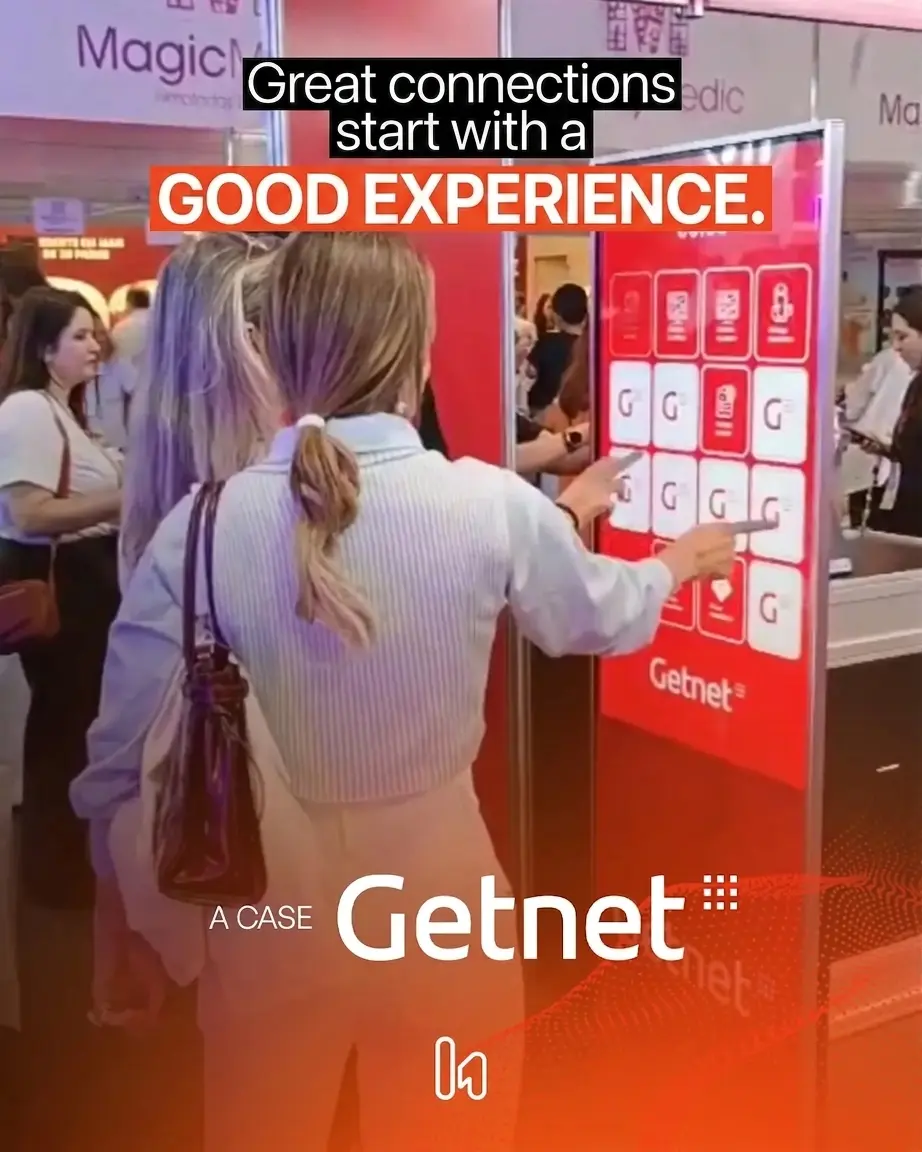
- Trade Shows and Events: In a sea of booths, differentiation is crucial. Interactive experiences, such as Harmonika Experience's GameEventHub totems, gamified games, or augmented reality applications, attract visitors, extend dwell time, and facilitate data collection in a playful way. This transforms a simple booth into a highlight and a memorable interaction point.
- Corporate Training: Learning becomes more effective and engaging when gamified. Corporate games developed with technologies like CGI and AR can simulate real situations, engaging employees and improving knowledge retention in a practical and fun way.
- Education: For educators, parents, and children, interactive experiences make learning more accessible and interesting, transforming complex concepts into stimulating challenges.
- Brand Activation: Creating a unique moment for the audience to interact directly with the brand strengthens identity, generates buzz, and provides new contact opportunities that extend far beyond the physical event.
Harmonika Experience: Innovation for Real Engagement
Harmonika Experience stands out as a specialist in creating these experiences. With expertise in over 30 CGI software and a robust focus on gamification, the company develops customized solutions ranging from consumer games (such as "Axe Me Down" and "Big Sword Hero") to complex platforms like GameEventHub. This interactive totem system not only entertains but also collects valuable data and optimizes event ROI.
Whether with interactive games, augmented reality for events, or innovative simulations, Harmonika transforms any space into a stage for memorable interactions, ensuring that the audience not only observes but participates and truly connects with your brand.
How to Create Unforgettable Experiences?
To successfully implement experiential marketing, it is essential to:
- Know Your Audience: Understanding their expectations, interests, and behaviors is the first step to creating something relevant.
- Define Clear Objectives: What result are you seeking? Increased sales, engagement, data collection, brand strengthening?
- Use Technology to Your Advantage: Tools like augmented reality, gamification, and interactive totems enhance the experience and make it more immersive and memorable.
- Focus on Emotion and Participation: The experience should evoke feelings and encourage active, not just passive, interaction.
Experiential marketing is not just a trend, but an evolution in how brands and audiences connect. Investing in interactive experiences is investing in lasting relationships and results that go far beyond expectations.

Comments (0)
No comments yet. Be the first to comment!
Leave your comment